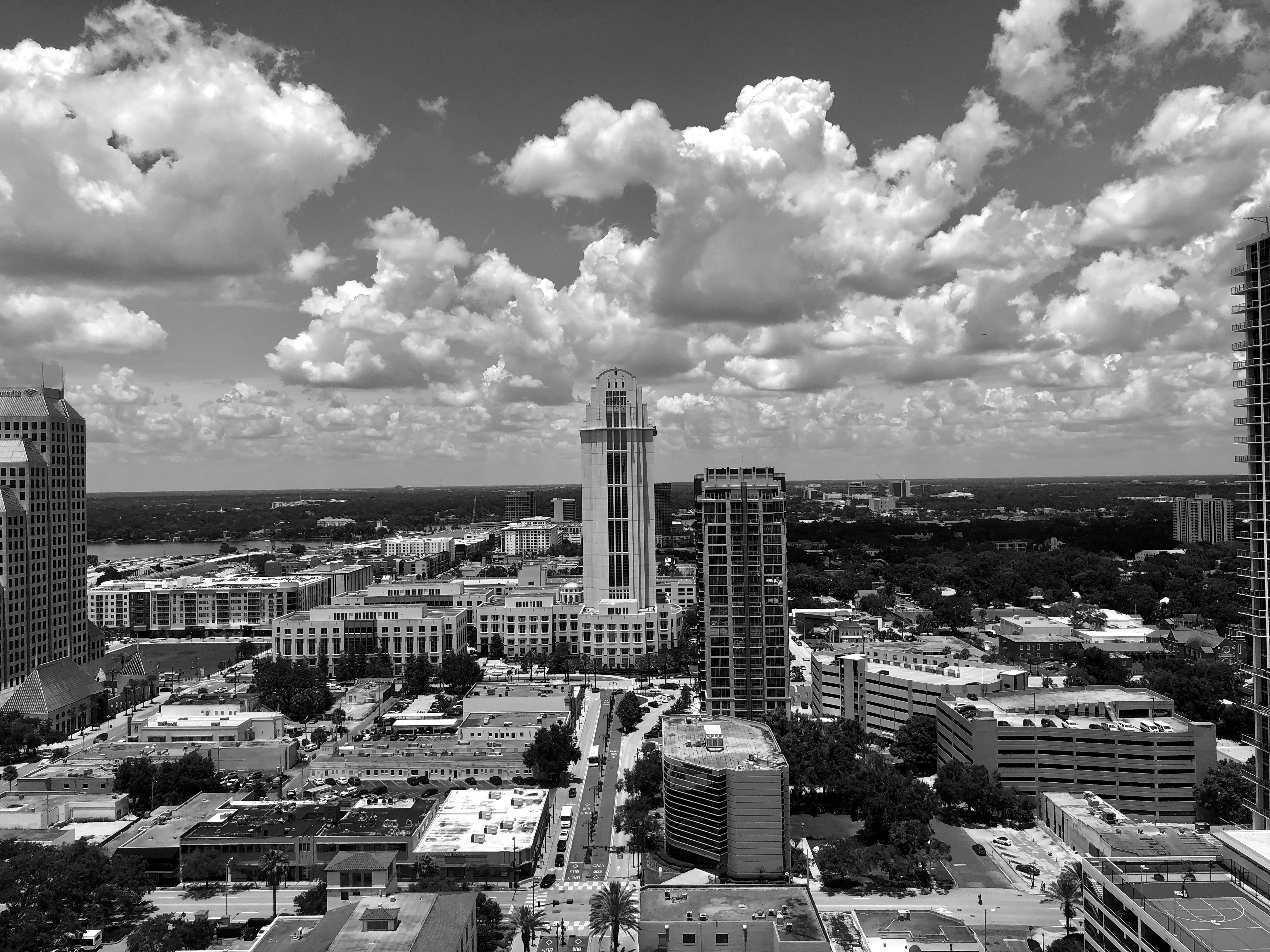
SIRS reports have affected Downtown Orlando condos in five major ways:
- Exposed deferred maintenance that was previously invisible to buyers
- Forced higher reserve contributions and HOA dues
- Triggered special assessments and association loans
- Created additional Fannie Mae and Freddie Mac underwriting problems
- Reduced investor returns, buyer demand, sales absorption and resale values
The effect is most pronounced in Downtown Orlando’s older high-rise buildings, but SIRS does not automatically make an older condominium “unwarrantable.”
1. SIRS changed the market from unit-based to building-based
Before Florida’s post-Surfside reforms, buyers often focused primarily on the individual unit:
- Interior renovations
- Floor and view
- Parking spaces
- Amenities
- Comparable sales
- Monthly HOA fee
SIRS shifted attention to the financial and physical condition of the entire condominium project. Buyers and lenders now examine:
- Roofs
- Structural systems
- Balconies
- Building envelope and waterproofing
- Plumbing
- Electrical systems
- Fire-protection systems
- Elevators
- Parking structures
- Remaining useful life of major components
- Estimated replacement costs
- Existing reserves
- Future annual reserve requirements
Consequently, a renovated unit with strong views may still be difficult to sell if the association has major unfunded obligations.
2. SIRS exposed decades of reserve underfunding
Many Florida condominium associations historically kept assessments artificially low by:
- Waiving reserves
- Partially funding reserves
- Delaying major projects
- Using operating cash for capital expenses
- Waiting until failure before replacing components
- Relying on future special assessments
SIRS converted these deferred obligations into documented financial liabilities. Once a reserve study estimates the remaining life and replacement cost of covered components, the association must confront the actual cost.
For Downtown Orlando owners, this commonly produces:
- Substantial annual budget increases
- Higher monthly HOA assessments
- Special assessments
- Association borrowing
- Longer-term monthly loan payments
- Reduced discretionary services
- Delayed cosmetic improvements
The result is painful but economically revealing: SIRS generally did not create the underlying deterioration. It identified and quantified costs that already existed.
3. HOA fees increased faster than rents and incomes
Downtown condominium associations are simultaneously absorbing:
- SIRS reserve funding
- Insurance premiums
- Engineering expenses
- Construction-cost inflation
- Elevator and mechanical contracts
- Security, concierge and staffing costs
- Utility increases
- Association-loan payments
- Legal and professional fees
These expenses are passed to owners through regular or special assessments.
The increase directly affects residential affordability. Mortgage underwriting generally includes monthly HOA assessments in the borrower’s debt-to-income ratio. Every HOA increase reduces the mortgage payment—and therefore the purchase price—a buyer can qualify to carry.
For investors, the problem is more severe because market rent has not necessarily increased at the same rate as ownership expenses. In certain Downtown units:
Rent−HOA−Taxes−Insurance−Operating Costs≤0\text{Rent} – \text{HOA} – \text{Taxes} – \text{Insurance} – \text{Operating Costs} \leq 0
That leaves little or no net operating income before mortgage payments. As a result:
- Capitalization rates compress toward zero
- Leveraged cash flow becomes negative
- Investors demand lower acquisition prices
- Existing owners may be unable to sell without accepting a loss
- Corporate or long-term leasing becomes a holding strategy rather than a true income investment
At 101 Eola, for example, the previously analyzed Unit 1209 carried approximately $2,385 in monthly HOA expenses against $3,600 in rent. After approximately $765 in monthly property taxes, only about $450 remained before insurance, management, maintenance, vacancy and debt service. This illustrates how reserve and association-loan obligations can destroy otherwise attractive rental economics.
4. Special assessments became part of the purchase price
A condominium listed for $450,000 with a $40,000 assessment is not economically equivalent to an unassessed $450,000 unit.
Sophisticated buyers now calculate an effective acquisition cost:
Purchase Price+Unpaid Assessment+Association-Loan Obligation+Expected Unit Repairs=Effective Cost\text{Purchase Price} + \text{Unpaid Assessment} + \text{Association-Loan Obligation} + \text{Expected Unit Repairs} = \text{Effective Cost}
They may demand that the seller:
- Pay the assessment at closing
- Reduce the purchase price
- Provide an assessment credit
- Escrow funds for unresolved work
- Accept a financing contingency tied to project eligibility
Even when the seller pays the assessment, the building may remain difficult to finance if the underlying critical repairs have not been completed. Paying for the work and completing the work are separate underwriting events.
5. SIRS reports created new Fannie and Freddie underwriting evidence
SIRS is a Florida statutory document, not a Fannie Mae or Freddie Mac approval. Nevertheless, lenders may use it to evaluate:
- Critical repairs
- Significant deferred maintenance
- Structural findings
- Reserve adequacy
- Future capital expenses
- Special-assessment exposure
- Whether the adopted budget reflects necessary funding
This creates several possible outcomes:
| SIRS condition | Likely financing effect |
|---|---|
| No critical repairs and credible funding | Supports conventional review |
| Repairs identified, funded and completed | Potentially financeable with completion evidence |
| Repairs funded but still underway | Financing may remain restricted |
| Critical repairs unresolved | Possible Fannie/Freddie ineligibility |
| Reserve recommendation not reflected in budget | Full Review problem |
| Incomplete or conflicting documentation | Lender may suspend or decline review |
| No current SIRS when one is legally required | Major eligibility and compliance concern |
Under the 2026 standards, the problem becomes more significant because Fannie’s Limited Review and Freddie’s Streamlined Review were retired for applications on or after August 3, 2026. More transactions now require fuller examination of the project.
If a lender relies on a reserve study to demonstrate reserve adequacy, the budget must include the study’s highest recommended reserve allocation, and the disallowed baseline method cannot be used. This creates a direct connection between the study and the adopted HOA budget.
The general enterprise reserve threshold remains 10% during 2026, but Fannie and Freddie have announced an increase to 15% for applicable loan applications beginning January 4, 2027.
6. SIRS increased transaction failures and closing times
A conventional buyer may qualify financially while the building fails project review. Common transaction problems include:
- HOA questionnaires returned incomplete
- Management companies answering “unknown”
- Missing engineering reports
- Budgets inconsistent with reserve studies
- Unresolved repair findings
- Insurance documents arriving late
- Inadequate evidence that work is complete
- Assessment delinquencies
- Association-loan documents not disclosed early
- Conflicting information in minutes, budgets and seller disclosures
This can cause:
- Longer financing contingencies
- Delayed closings
- Last-minute loan denials
- Lost deposits or contract disputes
- Repeated relisting
- Increasing days on market
- Seller concessionsls reducing market confidence
- Greater preference for cash or portfolio financing
The market therefore becomes functionally “cash-heavy” in affected buildings—not because every Downtown condominium is unwarrantable, but because cash purchasers can bypass agency project review.
7. SIRS contributed to falling absorption
Downtown Orlando’s declining condominium absorption reflects multiple pressures, including interest rates, insurance, taxes, HOA increases and financing restrictions. SIRS intensified those conditions.
The buyer’s decision now looks like this:
| Year | Orlando-area condo sales |
|---|---|
| 2021 | 5,889 |
| 2024 | 3,290 |
| 2025 | 2,902 |
That represents an approximately 50.7% decline from the 2021 peak through 2025. SIRS is not solely responsible, but it contributed to the decline by increasing carrying costs, revealing liabilities and complicating conventional financing.
Urbanista’s working Downtown estimate of roughly 160 closings during 2025, compared with more than 350 during a more normal year, suggests an even sharper local liquidity contraction. A fresh Stellar MLS export would be needed to publish that figure as a fully audited statistic.
8. SIRS created building-specific price discounts
SIRS does not affect every building equally. The greatest pricing pressure typically occurs where several conditions overlap:
- Material deferred maintenance
- High insurance premiums
- Underfunded reserves
- Active assessments
- Association debt
- High delinquency
- Incomplete records
- Unresolved lender eligibility
- High property taxes
- Already elevated monthly dues
Two similar units across the street from each other can therefore trade<void> at meaningfully different prices per square foot.
A well-managed building with a completed SIRS, funded reserves, completed repairs and organized lender documentation may command a premium. A building with unresolved findings and uncertain assessments is likely to trade at a discount—even when its amenities or location are superior.
9. SIRS has affected older “vintage” buildings without creating an age ban
“Vintage condominium” is a useful market description, but it is not an official Fannie Mae or Freddie Mac classification.
Neither enterprise automatically rejects a condominium because it was built in a particular year. Older buildings are affected more often because they are more likely to have:
- Aging structural and mechanical systems
- Near-term component replacements
- Historically waived reserves
- Water-intrusion or façade issues
- Older roofs and parking structures
- Larger engineering scopes
- Greater insurance scrutiny
The actual eligibility issue is physical condition, funding, insurance and documentation—not age alone.
10. SIRS also created long-term benefits
The immediate market effect has been negative for many owners, but SIRS provides meaningful long-term benefits:
- Dangerous conditions are identified earlier
- Capital obligations become more transparent
- Buyers can compare associations intelligently
- Well-managed buildings can distinguish themselves
- Reserve planning becomes less political
- Future owners are less likely to inherit completely undisclosed failures
- Buildings may become more insurable and financeable after repairs
- Values can recover once uncertainty is replaced by documented completion
The present market is effectively separating Downtown condominiums into two categories:
- Buildings with documented condition, credible funding and organized governance
- Buildings carrying unresolved physical, financial or documentary uncertainty
Conclusion
SIRS reports have not single-handedly caused Downtown Orlando’s condominium downturn. They have accelerated a necessary financial reckoning by converting deferred maintenance into visible, measurable ownership costs.
The largest immediate effects are:
- Higher HOA assessments
- Special assessments and association debt
- Lower investor returns
- Reduced mortgage qualification
- More extensive lender review
- Longer transaction timelines
- A smaller conventional buyer pool
- Lower absorption
- Building-specific price-per-square-foot discounts
The central market principle is now clear: the value of a Downtown Orlando condominium is determined not only by the unit, view and location, but by the association’s physical condition, reserve strategy, insurance program and ability to produce reliable documentation.